
What is Tandoori Chicken?
Ever had that moment when a sizzling plate of tandoori chicken hits your table, smoke rising like a spicy cloud, and your mouth just can’t wait? That’s the magic of tandoori chicken. It’s not just food—it’s a sensory experience. This dish is all about marinated chicken cooked at high heat until the edges char perfectly while the inside stays tender and juicy. The flavor is smoky, tangy, and deeply spiced, thanks to yogurt and a special blend of Indian masalas. In short, it’s the ultimate comfort food with a kick.
A Short History: From Clay Oven to Global Plate
You might wonder, where did this dish come from? The origins of tandoori chicken go way back to ancient India, when the tandoor, a clay oven, became a cooking icon. This tall, cylindrical oven was heated by charcoal or wood fire, producing intense heat that seared meat and bread beautifully.
Order Online
What started as a royal delicacy in Punjab later became a worldwide favorite. After India’s independence, tandoori chicken hit restaurant menus across the globe, symbolizing flavor, fire, and fusion.
The Tandoori Chicken: The Heart of the Dish
Imagine a clay oven that burns like a small volcano. That’s a tandoor. The heat inside can reach up to 900°F, cooking meat in minutes. As the chicken roasts on skewers inside, juices drip, sizzle, and smoke, creating that irresistible aroma. The tandoor locks in moisture while giving the chicken a crisp exterior. Even though most homes don’t have this ancient oven, modern grills and ovens can recreate that magic surprisingly well.
Core Ingredients That Make It Sing
Tandoori chicken’s charm lies in its simplicity. Just a handful of ingredients—yogurt, lemon juice, oil, and a blend of earthy spices—come together to create layers of flavor. Every ingredient has a role: yogurt tenderizes, lemon adds zing, and the spices add warmth and complexity.
Tandoori Chicken Selection and Cuts
Choosing the right chicken makes all the difference. Bone-in cuts like thighs, drumsticks, and legs are the real heroes here. They stay juicy even under high heat. Chicken breasts can work too, but they need extra care to avoid drying out. For the most flavor, always go with skinless bone-in chicken. The bones help retain moisture and add depth of taste during roasting.
Yogurt, Spices, and the Magic Marinade
Yogurt is the unsung hero of tandoori chicken. It’s the secret weapon that makes the meat tender and tangy. The marinade usually includes thick yogurt, lemon juice, garlic, ginger, and a colorful symphony of spices. This creamy mix doesn’t just coat the chicken—it transforms it. The acid from lemon and the enzymes in yogurt work together to break down tough fibers, making each bite melt-in-your-mouth delicious.
Key Spices: Garam Masala, Kashmiri Chili, and More
Now, let’s talk spices. This is where the flavor fireworks begin. Garam masala brings warmth with cinnamon, cloves, and cardamom. Kashmiri chili powder gives that signature red color without too much heat. Turmeric adds brightness, cumin adds earthiness, and coriander gives a subtle citrusy tone. A little fenugreek (kasuri methi) adds aroma that feels like a warm hug. These spices, when balanced well, create the bold flavor tandoori chicken is known for.
Step-by-Step Marinade & Prep
First things first—get your chicken ready. Wash it, pat it dry, and make a few shallow cuts across the meat. This allows the marinade to penetrate deeper. In a large bowl, mix yogurt, lemon juice, garlic, ginger, and your spice blend. Coat the chicken pieces thoroughly, making sure the marinade reaches every cut. Then, cover the bowl and let the magic happen in your refrigerator.
Tenderizing and Scoring: Why It Matters
Scoring isn’t just for looks—it’s essential. Those shallow cuts allow the marinade to reach the inner layers of the meat. This step also helps the chicken cook evenly, especially in high heat. Without scoring, you risk a bland interior and uneven cooking. Tenderizing lightly with a mallet can also help loosen the fibers and enhance flavor absorption.
Marinating Times and Tricks
Patience is key here. Ideally, marinate it for 8 to 12 hours, but even 2 hours can do wonders in a pinch. Just don’t over-marinate—anything over 24 hours can make the texture too soft. A great trick? Add a drizzle of oil to the marinade to help the spices stick and prevent dryness while cooking.
Cooking Methods: Tandoor, Grill, Oven, and Pan
Let’s be real—not everyone has a tandoor sitting in their backyard. But the beauty of tandoori chicken is that it adapts beautifully. Whether you’re using a grill, oven, or even a stovetop pan, you can still achieve that delicious char.
Tandoor vs Oven — What Changes?
In a traditional tandoor, chicken roasts vertically on skewers while heat envelops it from every side. The result? Smoky, charred perfection. In an oven, you can mimic this by placing your chicken on a rack with a tray beneath to catch drips. Broiling gives an extra char, and grilling outdoors brings in that authentic smoky vibe. Sure, it’s not exactly the same, but it’s close enough to satisfy your craving.
Tips for Perfect Char and Juiciness
Here’s the deal—tandoori chicken should be charred outside and juicy inside. To nail that, preheat your grill or oven properly. Avoid overcrowding your pan or grill, so the chicken cooks evenly. Flip only when needed and brush a little oil during cooking for extra shine. The final touch? That short pause helps the juices settle back inside.
Serving Suggestions and Pairings
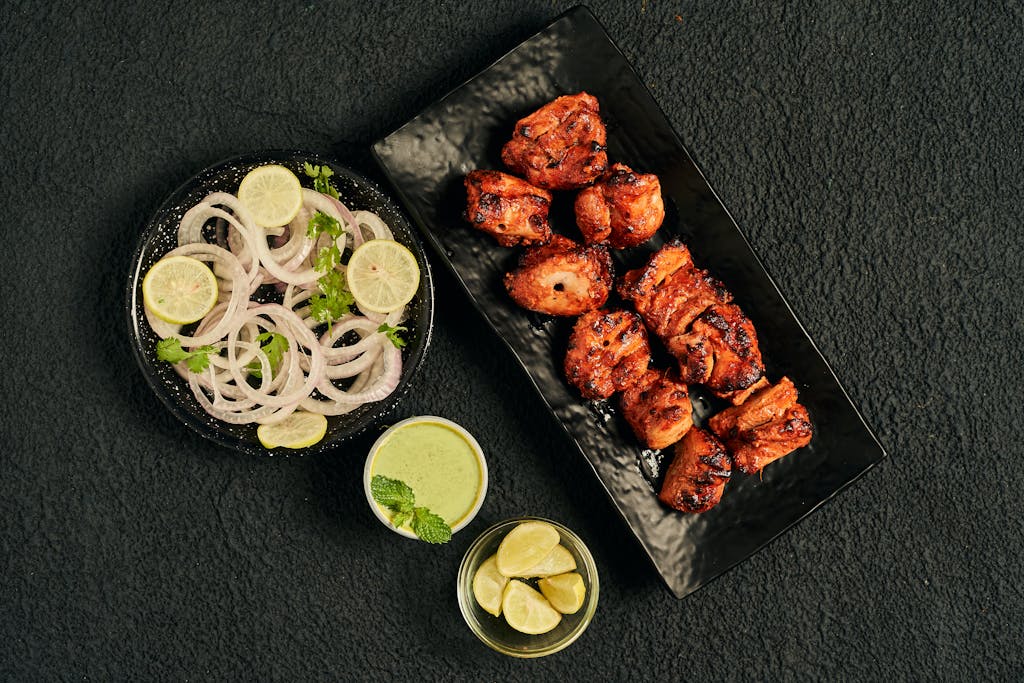
Now that your tandoori chicken looks irresistible, let’s talk about what to serve it with. Traditionally, it’s paired with mint chutney, lemon wedges, and onion slices. But you can get creative too. Pair it with naan, jeera rice, or even a crisp green salad. The smoky and spicy notes of the chicken pair beautifully with cooling sides.
Chutneys, Breads, and Sides
No tandoori experience is complete without green chutney—a fresh blend of mint, coriander, green chilies, and lemon. If you like a sweet contrast, mango chutney is another winner. As for breads, butter naan or lachha paratha soaks up all the flavor beautifully. On the side, try roasted veggies, dal, or raita to balance the heat.
Regional Variations & Modern Twists
Tandoori chicken has traveled across India and the world, picking up new flavors along the way. In Punjab, chefs often add mustard oil to the marinade for that extra punch. Down south, you’ll find versions with curry leaves and coconut. And in modern restaurants, it’s gone global—think tandoori tacos, pizza, and even pasta. The best part? The dish adapts to every palate while keeping its fiery soul.
Tandoori Fish, Paneer, and Vegan Options
The tandoori technique isn’t just for chicken. Paneer cubes marinated in the same mix become creamy and smoky delights. Fish and prawns soak up the marinade beautifully, too. And for vegans, cauliflower steaks or tofu make great alternatives. With the right blend of spices, anything can taste tandoori-style.
Nutrition and Health Considerations
Here’s the good news: tandoori chicken is actually one of the healthier Indian dishes out there. It’s high in protein and relatively low in fat—especially if you skip the butter glaze. The yogurt-based marinade adds probiotics and keeps things light. Just remember, moderation is key, and avoid over-charring, as burnt bits can be harsh on digestion.
Common Mistakes and Troubleshooting
Let’s be honest—everyone messes up sometimes. Maybe your chicken turns dry or pale. Don’t panic. If it’s dry, you probably overcooked it or didn’t marinate long enough. If it’s pale, the heat wasn’t high enough. And if it’s mushy, you likely marinated it too long. The fix? Balance your timing and temperature. Every tandoori cook learns by trial and error.
Storing, Reheating, and Leftover Ideas
Got leftovers? Lucky you. Store your tandoori chicken in an airtight container in the fridge for up to 3 days. To reheat, use an oven or air fryer—microwaves can make it rubbery. Leftovers make killer wraps, sandwiches, or even a smoky base for butter chicken. You can also shred it into salads or toss it with rice for a quick biryani twist.
Quick Recipe Snapshot (Printable-friendly)
Start with 1 kg of bone-in chicken, preferably legs or thighs. In a large bowl, mix 1 cup thick yogurt, 2 tbsp lemon juice, 1 tbsp ginger-garlic paste, 1 tsp each of turmeric, cumin, and coriander, 1 tbsp Kashmiri chili powder, 1 tsp garam masala, salt to taste, and 2 tbsp oil. Coat the chicken thoroughly with this marinade and refrigerate for 6–12 hours. Grill or bake at high heat until slightly charred and cooked through. Let it rest for a few minutes, then serve with chutney and lemon wedges.
Conclusion to Tandoori Chicken
Tandoori chicken is not just a dish—it’s a story told through fire and spice. Every bite carries centuries of tradition, blended with the thrill of modern cooking. Whether you roast it in a tandoor or bake it in your home oven, it’s all about the smoky flavor, bold color, and juicy tenderness. It’s the perfect mix of culture, comfort, and culinary creativity. Next time you’re craving something bold, make tandoori chicken—and let your kitchen smell like India.
FAQs About Tandoori Chicken
1. What is Tandoori Chicken?
Tandoori Chicken is a famous Indian dish made by marinating chicken in yogurt and spices, then cooking it in a clay oven called a tandoor. The high heat gives it a smoky flavor and charred texture while keeping the inside juicy and flavorful.
2. Why is it called Tandoori Chicken?
It’s called Tandoori Chicken because it’s traditionally cooked in a tandoor, a cylindrical clay oven. The word “tandoor” comes from Persian origins, meaning “fire” or “heat.”
3. What makes Tandoori Chicken red?
The signature red color comes from natural spices like Kashmiri red chili powder or paprika. In restaurants, some may use food coloring, but authentic recipes rely on spices for that vibrant hue.
4. Is Tandoori Chicken spicy?
Not necessarily! While it’s loaded with spices, the heat level is moderate. You can adjust the chili powder to make it mild, medium, or extra hot based on your preference.
5. What is the difference between Tandoori Chicken and Chicken Tikka?
Tandoori Chicken uses larger, bone-in pieces marinated in yogurt and spices, while Chicken Tikka is made with boneless chunks. Both are cooked in a tandoor but differ in size and serving style.