
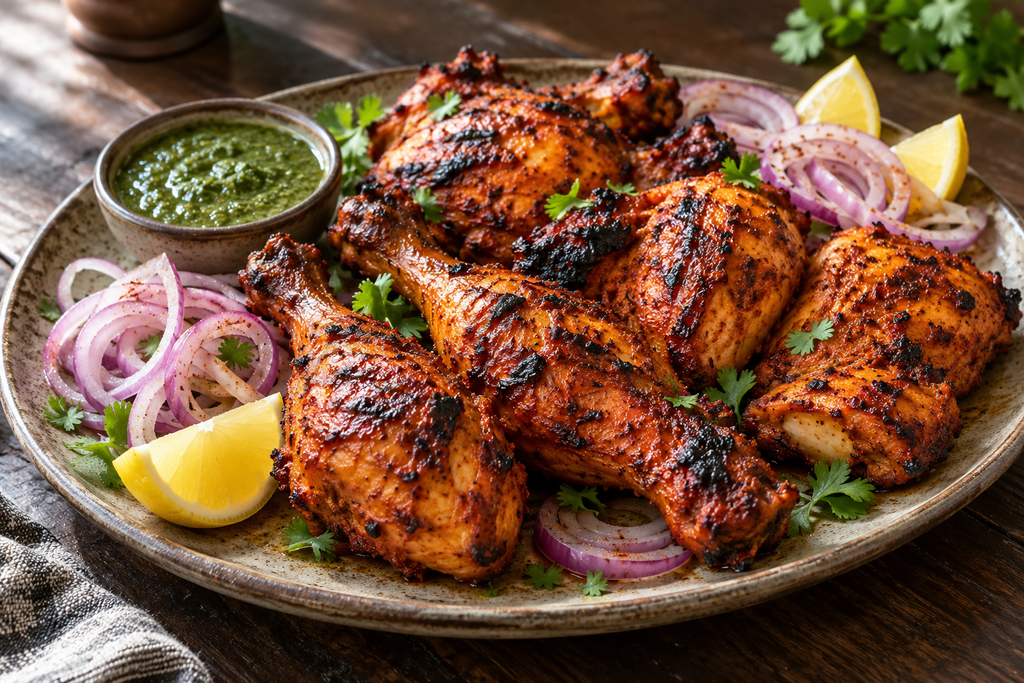
Chicken tandoori brings together tangy seasoning, aromatic spices, and roasted flavor in a dish that needs no rich gravy. Its distinctive character comes from the combination of a seasoned marinade and intense cooking heat.
For diners exploring Indian food in NYC, understanding these elements makes choosing a tandoori dish easier. From the coating on the chicken to its lightly charred edges, each part contributes something different to the experience.
What Makes Tandoori Cooking Distinctive?
The dish takes its name from the tandoor, a traditional clay oven. Chicken is commonly cooked on skewers inside this intensely heated space, developing a roasted exterior and areas of char.
Chicken tandoori is typically served without a surrounding sauce. That emphasizes the meat, its spice coating, and the contrast between the browned surface and tender interior. Flames Indian Aroma’s cooking guide describes this combination of marination and high heat.
Why the Marinade Matters
A yogurt marinade provides a tangy foundation and helps the seasonings coat the chicken. Ginger, garlic, citrus juice, and ground spices add further layers of flavor. Recipes vary considerably. Some use a single marinade, while others season the chicken in stages. For example, The Kitchn’s tandoori chicken recipe uses an initial ginger, garlic, and lime mixture followed by a seasoned yogurt coating. This explains why chicken tandoori can taste different across kitchens even when the dishes share the same name. The ingredients, proportions, and preparation all influence the result.
How Spices Build Flavor
The seasoning offers more than chili heat. Cumin brings earthy notes, while coriander and other spices contribute their own aromas. Depending on the recipe, garam masala adds another layer of fragrant spice. Its composition varies, so different blends can produce noticeably different results. Color alone is an unreliable guide to heat. A reddish coating does not tell you exactly how spicy a serving will taste. Ask about the seasoning if you prefer a gentler dish.
Where the Smoky Character Comes From
The marinade supplies tang and spice, while cooking contributes roasted aromas and char. A traditional tandoor creates a different cooking environment from a household oven. Grilled and oven-roasted versions can still develop flavorful browned surfaces. The Kitchn provides both methods, illustrating how the dish can be adapted to different equipment.
Enjoy Chicken Tandoori in East Harlem
When ordering, ask about the cut, portion size, spice level, and included accompaniments. These details help you decide whether to add bread, rice, or another dish. Lemon, sliced onions, and chutney can provide contrasting flavors alongside the chicken. Start with a modest order and add sides according to your appetite. Explore Flames Indian Aroma and check its current menu before visiting. Understanding the marinade, seasoning, and cooking method gives you more to appreciate with every bite.