
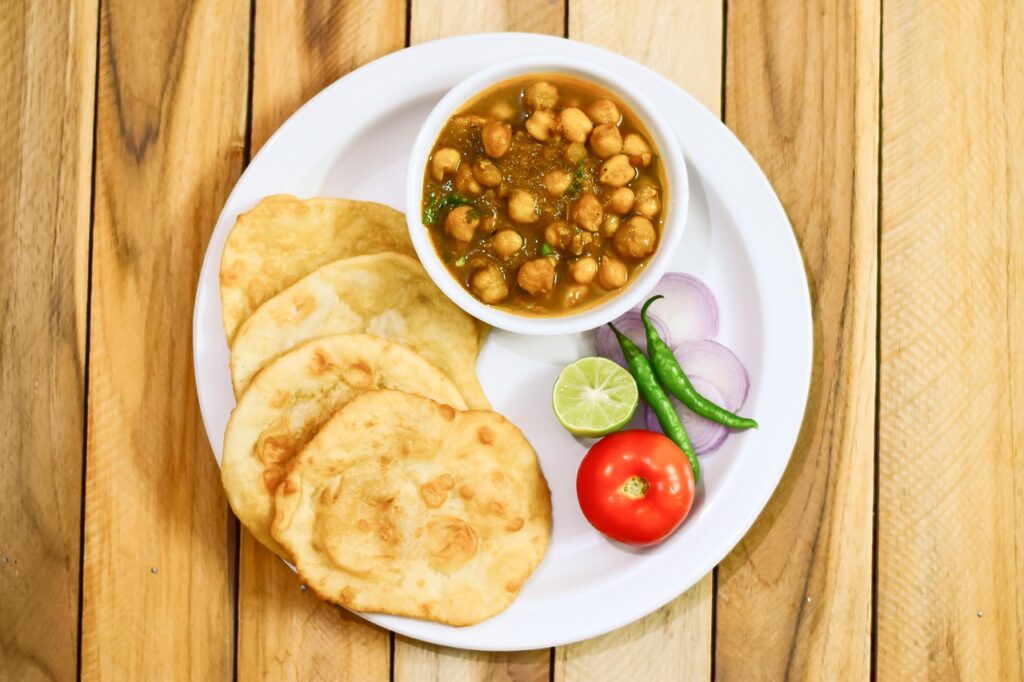
Chole Bhature perfectly captures the essence of North Indian Street food. This beloved combo of spicy chickpeas and fluffy fried bread is more than just a meal—it’s a burst of bold flavours and timeless tradition. The aroma of simmering chole and the sound of bhature frying instantly draw you in, evoking nostalgia and the comforting warmth of home.
What Is Chole Bhature?
Chole Bhature is a hearty mix of spicy chickpeas and deep-fried bread, combining simplicity with rich, layered flavours. The tangy chole pairs perfectly with the soft, puffed bhature for a satisfying, addictive meal enjoyed any time of day. More than food, it’s a beloved ritual and a flavorful story shared across generations.
Order Online
Chole: The Spiced Chickpea Curry
The chole is more than chickpeas in gravy—it’s a masterpiece of spice and slow cooking. Soaked overnight and simmered in a rich mix of onions, tomatoes, ginger, and garlic, the chickpeas absorb layers of flavour. A blend of cumin, coriander, garam masala, and amchur adds depth, warmth, and tang, creating a bold yet comforting dish that lingers on the palate.
Bhature: The Puffy Fried Bread
Bhature are the golden, puffed breads that complete Chole Bhature’s magic. Made from flour, yogurt, and a touch of leavening, the dough rests to develop flavour and softness. When fried, it puffs beautifully—crispy outside, soft inside—perfect for scooping up the spicy chole. Tearing into one releases steam and aroma, promising a truly special bite.
Origins and History
Chole Bhature originated in Northern India, particularly Punjab, and became popular as a hearty, flavorful dish combining spicy chickpeas with deep-fried bread. It reflects the region’s love for bold flavours and rich meals.
Regional Roots: Punjab and Delhi
Chole Bhature originated in the northern plains of India, especially Punjab and Delhi. Rooted in Punjab’s rich, spice-laden cuisine, it gained wider fame after the partition when Punjabi migrants brought it to Delhi. From there, it evolved into a national favourite, loved in cafés, dhabas, and homes across India.
How It Spread Across India and the World
From Amritsar’s streets to Mumbai’s restaurants, Chole Bhature has become a pan-Indian favourite. Its spicy, hearty appeal travels well, carried by Indian communities worldwide. Today, it’s enjoyed in Indian eateries across the U.S., UK, and the Middle East. This proper comfort food crosses borders while keeping its authentic charm.
Key Ingredients That Make It Sing
The dish shines with tender chickpeas, tangy tomatoes, aromatic spices like cumin and garam masala, and fluffy bhature made from flour, yogurt, and baking agents. Each element adds depth and texture to the overall flavour.
Chickpeas and Their Prep
Perfect chole begins with good-quality chickpeas soaked overnight for at least eight hours. They’re then boiled with salt, bay leaves, and sometimes a tea bag for a rich colour and an earthy flavour. The chickpeas should be soft yet firm—tender enough to absorb spices but still hold their shape for a satisfying bite.
Spices That Matter
No Chole Bhature is complete without its signature spices. Each region has its own blend, often featuring cumin, coriander, turmeric, cardamom, cloves, cinnamon, and bay leaves. Red chilli adds heat, garam masala adds warmth, and amchur or anardana adds a tangy kick. Together, they infuse the dish with depth and celebrate India’s rich culinary heritage.
Dough and Frying Essentials
Bhature may seem simple, but it requires precision. The dough must be soft, elastic, and well-rested. Yogurt adds tenderness and a faint tang that complements the chickpeas beautifully. When it comes to frying, the oil’s temperature is crucial—too hot and the bhature burn quickly; too cold and they absorb excess oil. The perfect bhatura rises, puffs fully, and turns golden-brown, leaving you with that irresistible mix of crisp and chewy textures.
Step-by-Step Cooking Overview (Simplified)
Soak and boil chickpeas, then cook them in a spiced tomato-onion gravy. Prepare and rest the bhature dough, roll it out, and deep-fry until golden and puffed.
Preparing the Chole
Heat the oil, then sauté the onions until golden. Add the ginger-garlic paste and tomatoes. Cook until soft, then mix in the dry spices and let the masala render its oil. Add boiled chickpeas with a bit of cooking water and simmer for 20–30 minutes. Finish with garam masala, coriander, and lemon juice for a rich, flavorful curry that coats every chickpea perfectly.
Making Bhature Dough
Mix flour, salt, sugar, and baking powder, then add yogurt and warm water to form a smooth dough. Coat with oil, cover, and let it rest 2–3 hours for fermentation. Divide into portions, roll into discs, and deep-fry until puffed and golden—watching them inflate is pure joy.
Frying Tips and Common Mistakes
Here’s where experience meets instinct. Always ensure your oil is at medium-high temperature before dropping in the dough. If your bhature aren’t puffing up, it could be due to insufficient fermentation, over-kneading, or uneven rolling. Avoid using stale dough and make sure the discs are evenly thick. Press the bhatura gently with a ladle while frying to help it rise evenly. These small details make all the difference between an average and an extraordinary result.
Variations You’ll Love
Try variations like paneer-stuffed bhature, spicy Amritsari chole, or whole-wheat bhature for a healthier twist—each adds a unique spin to the classic combo.
Amritsari Chole
Amritsari Chole is a bolder cousin of the classic version, known for its rich, dark colour and pronounced tangy taste. Some chefs use black tea leaves or dried amla (Indian gooseberry) during cooking to achieve that deep hue. The result is a spicier, more robust curry that pairs perfectly with crisp bhature or even kulcha.
Tandoori or Stuffed Bhature
Some regions and restaurants experiment with bhature, stuffing them with flavorful fillings like spiced paneer, mashed potatoes, or peas. Others use a tandoor instead of a frying pan, lending the bread a smoky, earthy aroma. This twist not only adds texture but also gives the dish a gourmet appeal while staying rooted in tradition.
Fusion and Healthier Versions
In today’s health-conscious world, Chole Bhature has seen many modern interpretations. Whole-wheat or multigrain bhature offer added fibre, while baked or air-fried versions cut down on oil. Some even serve the chole over rice or quinoa bowls for a balanced, protein-rich meal. These innovative adaptations keep the spirit of the dish alive while fitting into contemporary lifestyles.
Where to Find the Best Chole Bhature
You’ll find the best Chole Bhature in North Indian cities like Delhi, Amritsar, and Ludhiana, especially at local dhabas and iconic street food stalls known for their authentic flavours.
Street Stalls vs. Restaurants
The magic of Chole Bhature lies in its street-side simplicity. Vendors serve it fresh and aromatic, with bhature fried on the spot and smoky, flavorful chole. Restaurants, meanwhile, offer a refined version—less oily, beautifully presented, yet equally comforting. Each style has its own irresistible charm.
What to Look For When Choosing a Place
When searching for your perfect plate of Chole Bhature, always observe freshness and balance. Bhature should be soft yet crisp, not greasy. The chole should have a thick, flavorful gravy, not overly oily or watery. A squeeze of lemon and freshly sliced onions on the side often signal attention to authenticity. And of course, a long queue of locals outside the shop is always the best endorsement.
Serving Suggestions & Pairings on Chole Bhature
Serve Chole Bhature hot with sliced onions, green chilies, lemon wedges, and a side of pickle or raita for a refreshing contrast to the rich flavors.
Pickles, Sliced Onion, and Chai
Traditionally, Chole Bhature is served with sliced onions, lemon wedges, and tangy mango or lime pickle. These sides cut through the richness of the dish and enhance its layers of flavour. To complete the experience, many prefer a steaming cup of masala chai or a chilled glass of sweet lassi. The combination of spicy, tangy, and cooling elements makes it unforgettable.
Modern Pairings
For a contemporary twist, pair Chole Bhature with refreshing cucumber raita or green chutney. A fresh salad on the side adds crunch, while tamarind chutney brings a touch of sweetness. These modern accompaniments balance the dish and make it feel lighter without compromising its soul.
Nutrition Snapshot
Chole Bhature is rich in protein and fibre from chickpeas, but also high in carbs and fats from the deep-fried bhature—best enjoyed occasionally as a hearty indulgence.
Calories and Macros
Let’s be honest—Chole Bhature Food is indulgent. A single serving can pack anywhere from 700 to 1,200 calories, depending on the portion and preparation. However, it’s not all guilty pleasure. Chickpeas provide protein, fibre, and iron, while yogurt in the bhature adds probiotics. Moderation is key—enjoy it occasionally, and it’s pure happiness on a plate.
How to Make It More Balanced
You can tweak the recipe for a healthier spin by using less oil in the chole, baking your bhature, or replacing half the all-purpose flour with whole wheat. Adding spinach, tomatoes, or bell peppers boosts nutrients and colour. Remember, balance is about smart swaps, not sacrifice.
Cultural Significance & Social Rituals
Chole Bhature is more than a meal—it’s a beloved North Indian comfort food often shared during weekend breakfasts, festive gatherings, and family outings, symbolising warmth and indulgence.
Weekend Brunch Culture
In North India, especially in Delhi and Punjab, Chole Bhature Food is synonymous with weekend brunch. Sunday mornings come alive with the aroma of frying bhature and the laughter of families gathering at their favourite stalls. It’s a ritual—a weekly reminder that food is best enjoyed together.
Celebrations and Comfort Food Moments
Beyond routine meals, Chole Bhature is also the go-to comfort food for celebrations and special days. Whether it’s a festival morning, a birthday, or just a rainy afternoon craving, this dish brings instant joy. It has the rare ability to turn an ordinary day into a mini celebration.
Common Questions and Troubleshooting
Common questions include why bhature don’t puff (often due to dough issues) or why chole lack flavour (usually due to under-spicing). Ensuring proper fermentation and slow cooking helps perfect the dish.
Why Don’t My Chole Bhature Puff?
If your bhature aren’t puffing properly, chances are the dough wasn’t rested long enough or was rolled unevenly. The oil temperature might also be off—too cold and they’ll stay flat, too hot and they’ll burn before puffing. Consistency and patience are everything here.
What If My Chole Bhature Is Too Tangy or Bland?
A chole that’s too tangy can be mellowed with a pinch of sugar or a splash of cream. On the other hand, if it’s bland, revive it with roasted cumin, salt, or a touch of garam masala. Always taste as you go—flavour control is the mark of a great cook.
Quick Tips from Street Chefs
The best street vendors swear by three golden rules:
Always taste your masala before adding chickpeas, use chickpea stock for extra flavour, and add lemon juice only at the end for brightness. Fry bhature in small batches and never reheat them in a microwave—it kills the texture. Warm them briefly in an oven or on a tawa instead.
Why Chole Bhature Remains Timeless
Despite changing food trends, Chole Bhature Food remains timeless because it connects people through flavour and nostalgia. It’s rustic yet refined, messy yet magical. Whether served in steel plates at roadside stalls or on porcelain dishes in fine restaurants, its essence never changes—comfort, satisfaction, and joy.
Conclusion to Chole Bhature
At its heart, Chole Bhature Food is more than a culinary combination—it’s a piece of Indian heritage. The perfect balance of spice, texture, and indulgence makes it both comforting and exciting. Every bite tells a story—of tradition, innovation, and pure love for food. So the next time you crave something soulful, let the aroma of chole and the puff of hot bhature guide you to happiness.
FAQs About Chole Bhature
Q1: What is Chole Bhature, and why is it so popular in India?
Chole Bhature is a classic North Indian dish of spicy chickpeas and deep-fried bread. Loved for its rich flavour and comforting taste, it’s a popular choice from Delhi’s streets to restaurant menus across India.
Q2: How is traditional Chole Bhature prepared?
Traditional Chole Bhature features chickpeas soaked overnight and cooked in a spiced tomato-onion gravy, paired with deep-fried, fluffy bhature made from flour, yogurt, and leavening agents. Served hot with onions and pickle, it’s a flavorful and crispy delight.
Q3: Is Chole Bhature healthy or high in calories?
While delicious, Chole Bhature is a calorie-dense dish. The fried bhature adds extra fat, and the chickpeas, though protein-rich, come in a spiced gravy with oil. However, occasional indulgence is acceptable—pair it with a salad, lassi, or raita to balance out the richness.
Q4: Can Chole Bhature be made without deep frying?
Yes, you can make Chole Bhature healthier by baking or air-frying the bhature instead of deep-frying. Though the texture will differ slightly, it still gives that soft, chewy satisfaction. Using less oil in the chole curry also helps make it a lighter meal.
Q5: What are the main spices used in Chole Bhature?
The authentic Chole Bhature flavour comes from spices like cumin, coriander, turmeric, garam masala, bay leaves, cloves, and amchur powder. These spices give chole its deep, tangy, aromatic flavour, which perfectly complements the fried bhature.