
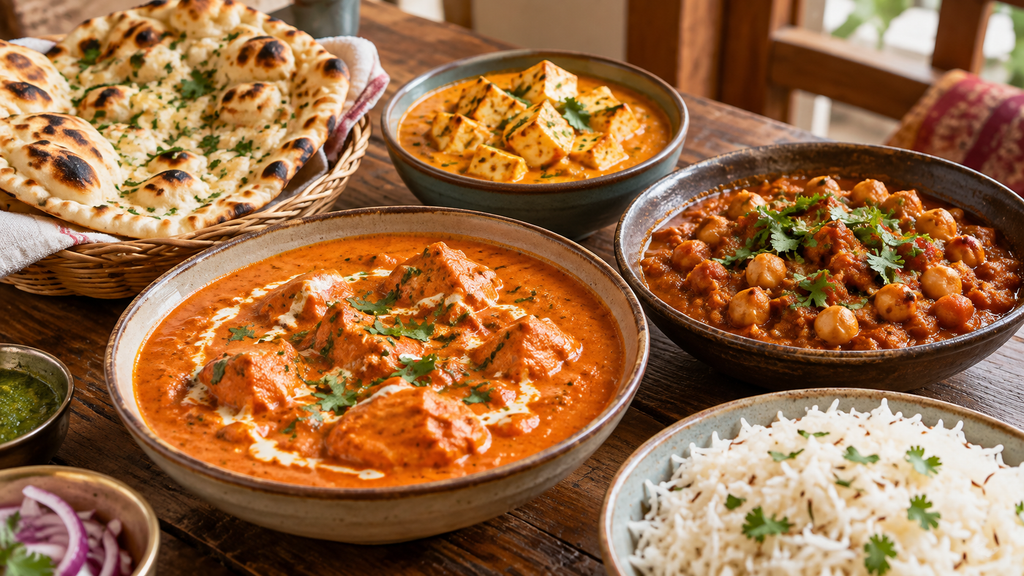
When someone says “curry,” you might picture one particular sauce or level of spice. In Indian cooking, the word covers a wide range of dishes. Ingredients, seasonings, cooking methods, and textures can all change from one preparation to another. Understanding those differences makes it easier to find a dish you’ll enjoy.
What Does “Curry” Mean on a Menu?
On a restaurant menu, curry usually describes a dish in which ingredients are cooked with a seasoned sauce or gravy. It does not refer to one fixed recipe. A tomato-based chicken dish, a creamy preparation, and a chickpea dish may all taste and feel quite different.
Are All Indian Curries Spicy?
No. Spices add aroma and flavor, but they do not always add strong chili heat. Some dishes are mild and creamy; others are tangy, richly seasoned, or noticeably hot. The amount of chili depends on the recipe and the kitchen’s preparation.
If you are unsure what to order, ask about the heat level of the specific dish. You can also ask which ingredients give its sauce its main flavor.
How Do Ingredients Change a Curry?
The main ingredient affects the dish, but the sauce matters just as much. Chicken in a buttery tomato sauce has its own rich flavor and texture. Vegetables, paneer, and meat can each bring something different to a seasoned gravy.
Chickpeas cooked with tomatoes and spices offer another example. Their firm texture creates a different experience from a creamy chicken dish.
Preparation matters, too. Some sauces are smooth and rich, while others let the ingredients stand out. These variations are part of what makes Indian curry a broad category rather than a single meal.
What Should You Eat With Curry?
Naan can be used to scoop up sauce, while rice absorbs it and makes the dish easy to enjoy by the spoonful. Choosing a bread or rice alongside your main dish adds another texture to the meal.
If you are ordering with others, sharing two different preparations can help you compare their flavors and find a favourite.
Explore Curry Dishes at Flames Indian Aroma
Flames Indian Aroma in East Harlem features dishes such as Butter Chicken and Chicken Tikka Masala, along with vegetarian options and freshly baked naan. Its selection gives diners several ways to explore Indian flavors. Check the current menu to see what is available and choose a dish that suits your preferred ingredients and spice level.