
There’s something magical about chicken biryani food. The moment the lid lifts, a wave of fragrant steam escapes, carrying spices, ghee, saffron, and tender chicken that seem to dance together. It is more than a meal; it’s a story, slowly cooked and shared across generations. Biryani is comfort, celebration, and nostalgia, all packed into one steaming pot.
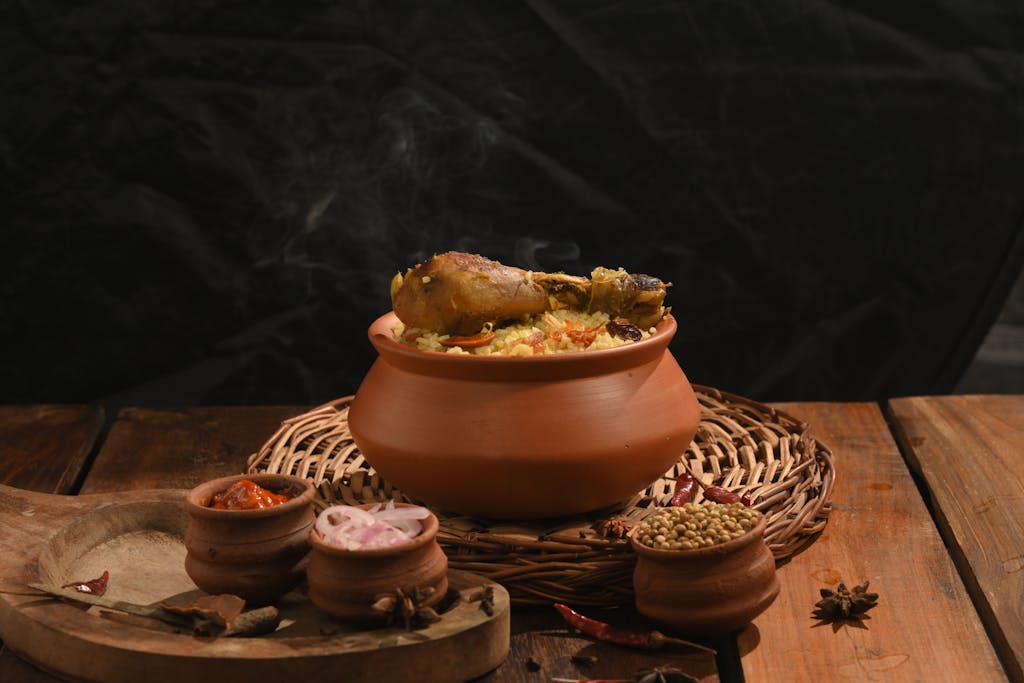
Origins and History of Chicken Biryani
Chicken biryani did not appear overnight. It evolved through centuries, influenced by traders, emperors, and home cooks alike. Originally, biryani travelled from Persia to India with the Mughals, gradually absorbing local flavours and cooking techniques. Over time, each region shaped its own version, creating biryani that is as diverse as the country itself. Today, biryani is a dish that marks celebrations, family gatherings, and special occasions across South Asia and beyond.
Order Online
Mughal Influence and Imperial Kitchens
In Mughal kitchens, biryani became an art form. Slow-cooking techniques like dum pukht were perfected, allowing the rice and meat to steam gently together. Luxurious ingredients such as saffron, ghee, and rose water were used in moderation to create layers of flavour. In essence, the Mughals transformed a simple rice-and-meat dish into a culinary masterpiece that symbolised both opulence and care.
Regional Variations Across South Asia
Biryani is not a single dish; it is a collection of regional masterpieces, each reflecting the local palate and culture. Hyderabadi biryani is bold and spicy, using layers of marinated chicken and par-cooked rice cooked under the dum method. Lucknowi biryani, in contrast, is subtle, focusing on aromatic whole spices and delicate flavours. Kolkata biryani introduced potatoes and sometimes boiled eggs, offering a milder, slightly sweet, and comforting version. Each variant tells a story of its origin and culinary heritage.
Hyderabadi Style
The Hyderabadi version is fiery and intense. Raw marinated chicken and par-cooked rice are layered and steamed, allowing the flavours to marry perfectly. The final dish is aromatic, with tender chicken and rice infused with spices, creating a sensory experience that lingers long after the last bite.
Lucknowi (Awadhi) Style
Lucknowi biryani takes a more refined approach. The focus is on fragrance rather than heat. Long, separate grains of rice are delicately layered with subtly spiced chicken, creating a balanced dish that exudes elegance. This biryani embodies the sophistication of the Awadhi culinary tradition.
Kolkata Style
Kolkata biryani brings in a unique twist with boiled potatoes. Its spicing is milder, often slightly sweet, and it sometimes includes boiled eggs. This version reflects both colonial influences and local tastes, offering comfort in every forkful without overwhelming heat.
Key Ingredients That Make Great Chicken Biryani
The secret to unforgettable biryani lies in the ingredients and how they are handled. The choice of rice, quality of chicken, and freshness of spices define the character of the dish. Fresh herbs, fried onions, and aromatic masalas all play their role in creating the perfect symphony of flavour.
Rice Choices: Basmati and Why It Matters
Long-grain basmati rice is essential for authentic biryani. Its fragrance, fluffiness, and ability to absorb flavours without turning sticky make it ideal. Rinsing and soaking the rice before cooking ensures each grain cooks evenly and separates beautifully when layered.
Chicken and Marinades
Marinades are the flavour engine of biryani. Yoghurt, ginger-garlic paste, chilli powder, turmeric, garam masala, and a touch of lemon juice not only tenderise the chicken but also infuse it deeply with flavour. Marinating overnight is ideal, but even a few hours allows the meat to soak up the aromatic spices.
Spices and Masala: The Heartbeat
Whole spices like cardamom, cloves, cinnamon, and bay leaves, combined with a custom spice blend, create depth and warmth. Balancing these spices is crucial, as too much can overpower and too little can leave the dish flat. The right mix ensures every bite has layers of complexity that define biryani.
Cooking Methods: Dum, Layering, and Heat Control
Cooking chicken biryani is as much about technique as it is about ingredients. Steam cooking, careful layering, and managing heat properly are essential to develop the perfect balance of flavours and textures.
Dum Pukht Technique
Dum, meaning steam, is central to traditional biryani. The pot is sealed so that the chicken releases juices and the rice absorbs them, creating an infused, aromatic dish. Slow steaming allows the flavours to meld together in harmony, resulting in a dish that is tender, fluffy, and richly flavoured.
Sealing the Pot and Steam Management
Traditionally, dough seals the lid to trap steam. Modern cooks can use a tight-fitting lid or foil to achieve the same effect. Gentle, low heat ensures that the steam circulates evenly without burning the rice or undercooking the chicken, making a heavy-bottomed pot ideal.
Layering and Timing
Layering is the secret to perfect biryani. Par-cooked rice forms the base, followed by marinated chicken, fried onions, fresh herbs, and spices. Another layer of rice on top, finished with saffron milk and a drizzle of ghee, ensures that every grain is flavorful. The pot is then simmered on low heat, allowing all ingredients to harmonise. Rushing this process can compromise texture and taste.
Flavour Profile: What to Expect
Chicken biryani offers a complex flavour profile. Tender chicken, aromatic rice, crispy fried onions, and fresh herbs create a symphony of taste. Each bite may start savoury, then reveal floral notes, a hint of heat, and a lingering richness that makes the dish unforgettable.
Serving Suggestions and Pairings
Biryani is best served hot with cooling and tangy sides that complement its richness. Fresh herbs like mint and coriander, fried onions, and a wedge of lemon brighten the dish. Accompaniments elevate the experience, balancing the intensity of flavours naturally.
Raita, Salads, and Chutneys
A cucumber-mint raita soothes the palate, while a simple onion-tomato salad adds freshness and crunch. Tangy tamarind or mango chutney provides contrast, enhancing the layered flavours of the biryani. These accompaniments are essential, transforming a meal into a complete experience.
Practical Home Tips for Perfect Biryani
Home cooks can achieve restaurant-quality biryani with a few careful practices. Choosing aged basmati rice, marinating the chicken thoroughly, and cooking on low heat are critical steps. Patience is key, as rushing the process can compromise flavour and texture. Tasting as you go ensures the dish develops the perfect balance of spice and aroma.
Common Mistakes to Avoid
Mistakes like overcooking rice or undermarinating chicken are common but avoidable. Overcooked rice becomes mushy and loses its individual grains, while insufficiently marinated chicken remains bland and tough. Additionally, opening the lid too frequently during cooking releases steam and hinders proper flavour infusion.
Overcooked Rice
Par-cooking rice to seventy per cent before layering ensures it finishes steaming perfectly in the pot. Each grain should remain separate, fluffy, and fragrant, allowing the final dish to have a light texture and an inviting aroma that enhances every bite.
Undermarinating Chicken
Marinating chicken properly allows spices to penetrate deeply. This results in tender, flavorful meat that complements the rice rather than tasting flat or dry, ensuring every bite bursts with rich, well-balanced seasoning that enhances the overall dish.
Quick Home-Friendly Chicken Biryani Recipe (Narrative Style)
For a practical approach, marinate one kilogram of chicken with yoghurt, chilli powder, garam masala, turmeric, and lemon juice for at least four hours. Par-cook one kilogram of basmati rice with bay leaves, cardamom, and salt until seventy per cent done. In a heavy-bottomed pot, layer half of the rice, then add the marinated chicken, followed by fried onions, mint, and coriander. Repeat layers, pouring saffron-infused milk and a little ghee on top. Seal the pot and cook slowly on low heat for twenty-five minutes. Allow it to rest for ten minutes before gently fluffing the layers. The result is a fragrant, layered biryani perfect for sharing.
Health, Variations, and Dietary Swaps
Biryani can be both indulgent and balanced. Using less ghee, opting for lean chicken, and incorporating vegetables make it lighter without compromising flavour. Plant-based alternatives like mushrooms, tofu, paneer, or jackfruit absorb spices well and maintain the rich aroma and depth that define biryani.
Lower-Fat or Lighter Versions
Substituting part of the ghee with neutral oil and using skinless chicken breasts reduces fat. Incorporating more vegetables stretches the protein and adds natural sweetness, keeping the dish satisfying but lighter on calories.
Vegetarian/Plant-Based Alternatives
Vegetarian biryani can be just as flavorful. Mushrooms, tofu, and paneer soak up the masala ideally, while roasted vegetables add texture and natural sweetness. Careful use of spices ensures that the vegetarian version remains aromatic and rich.
Where to Find Great Chicken Biryani Near You
For those who prefer ready-made biryani, search for local restaurants that specialise in authentic recipes. Look for terms like “dum biryani” or “house-made masala” in reviews, as these indicate traditional techniques. Family-run eateries often serve the most authentic, flavorful versions, providing a taste that is both genuine and comforting.
Why Chicken Biryani Matters: Culture & Celebrations
Biryani is more than food; it is a cultural expression. It is synonymous with festivals, weddings, and family gatherings. Preparing biryani often becomes a shared ritual, with stories, laughter, and memories woven into every layer. It connects people, creates joy, and brings a sense of warmth and celebration to any table.
Conclusion
Chicken biryani is a layered culinary masterpiece. Its history, aroma, and flavours create an experience that delights the senses. Whether prepared at home or enjoyed at a restaurant, biryani rewards patience, care, and attention to detail. With the right ingredients and thoughtful cooking, anyone can create a dish that is flavorful, comforting, and deeply satisfying.
FAQs
Q1: What is the best way to marinate chicken for Chicken Biryani?
For perfect Chicken Biryani, marinate the chicken in yoghurt, ginger-garlic paste, spices, and a touch of lemon juice. Marinating for at least four hours or overnight allows the flavours to penetrate deeply, making the meat tender and flavorful.
Q2: Can I use regular rice instead of basmati for Chicken Biryani?
While you can use regular rice, basmati is strongly recommended for Chicken Biryani. Its long, fragrant grains stay separate during cooking, which is essential for achieving the authentic texture and appearance of the dish.
Q3: How long should Chicken Biryani be cooked on the dum?
Chicken Biryani should ideally be cooked on low heat for 25 to 30 minutes during the dum process. This slow steaming allows the rice and chicken to absorb all the spices and aromatics, creating a layered, flavorful dish.
Q4: Is it necessary to use ghee for making Chicken Biryani?
Ghee enhances the aroma and richness of Chicken Biryani, but it is not strictly necessary. You can substitute a high-quality neutral oil for a lighter version while still achieving excellent flavour, though ghee gives that traditional taste.
Q5: Can I make a vegetarian version of Chicken Biryani?
Although vegetarian alternatives exist, Chicken Biryani refers explicitly to the dish made with chicken. For a similar flavour and texture without meat, ingredients like mushrooms, paneer, or tofu can be used. Still, it won’t technically be Chicken Biryani.